
Why does a mimosa welcome drink work?
A mimosa welcome drink works because a few guests who say yes bring the rest of the room along with them. At Teds All Day Brunch, 2 out of every 10 guests say yes, and the other tables soon follow on their own. Many restaurants miss out on these sales because the welcome isn't standardised and every server does something different.
How do you turn the welcome into a fixed routine?
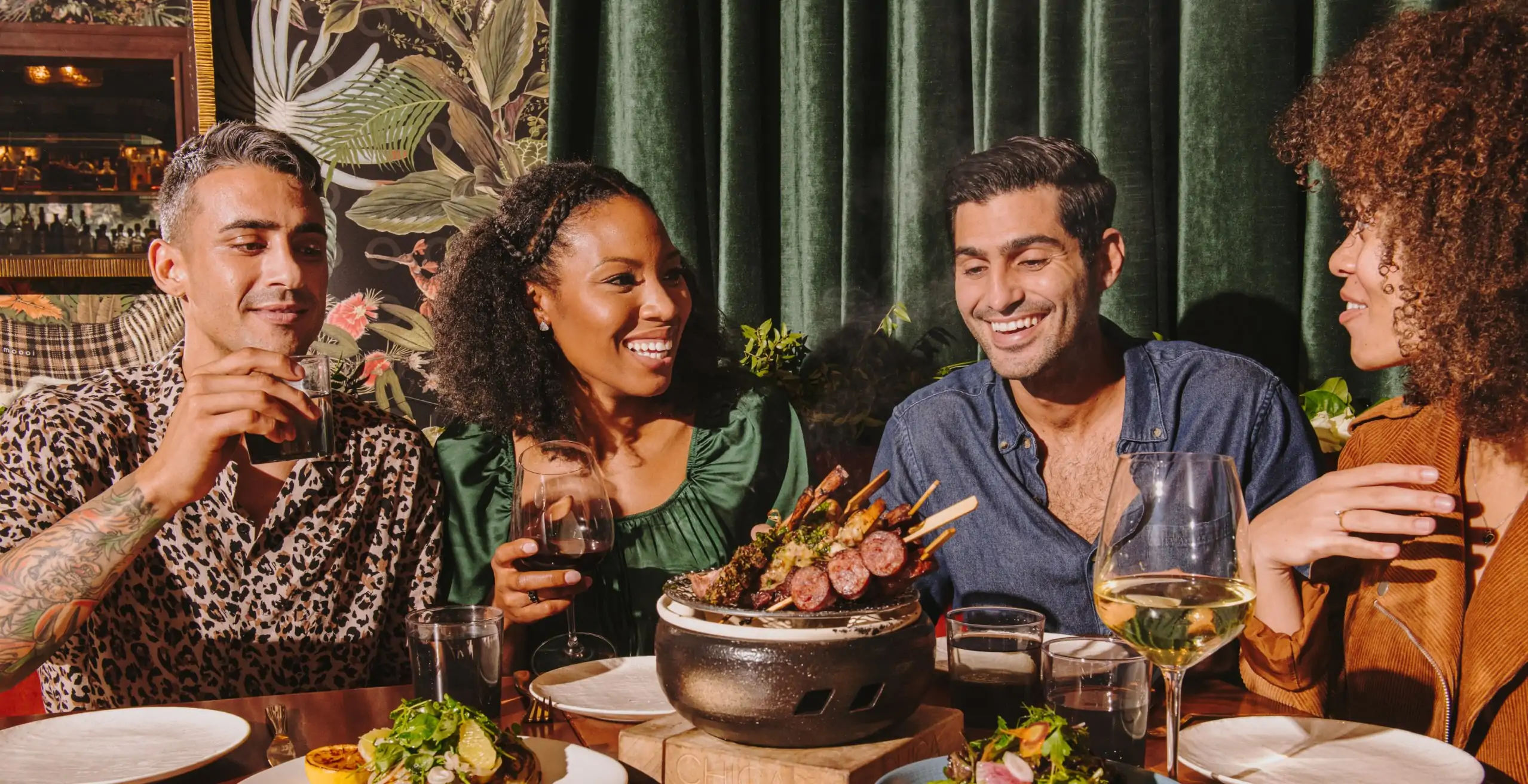
Teds All Day Brunch trains its front-of-house staff to greet every weekend guest the same way: a cappuccino or a mimosa to start. The question never changes, so the offer doesn't depend on who happens to be working that day. The effect comes from visibility: as soon as one table gets a mimosa, the neighbouring tables see it and order one too. Guests come up with their own reason, like good weather, a weekend without the kids or something to celebrate.
Why a fixed welcome question?
Every weekend guest gets the same question: "Would you like to start with a mimosa?" Because it's built into the service training, no table gets skipped.
What if 8 out of 10 say no?
That's part of it. The 2 guests who say yes are enough to win over the neighbouring tables, because guests order what they see around them.
Which occasions do you amplify?
A Sunday, sunshine outside, a weekend without the kids, a bit of shopping or something to celebrate. Guests who are enjoying a moment are more open to an extra drink.
Out of 10 people, 8 say no and 2 say yes. And before you know it, everybody's joining in.
Frequently asked questions
Is a standard welcome drink too pushy for guests?
Some people find a fixed welcome question too predictable. But asking isn't pressuring: guests are free to say no, and in practice most of them do. At Teds All Day Brunch, 8 out of 10 guests choose something else. The power lies in offering it consistently, not in pushing it. Giving a choice between a cappuccino and a mimosa keeps the tone hospitable.
Why do other tables order too when they see a mimosa?
Guests base their choices on what they see around them. When one table gets a mimosa, the drink becomes visible and feels like the natural choice for the rest of the room. Guests then come up with their own reason, like good weather, a free Sunday, a weekend without the kids or something to celebrate. As a result, the order spreads without staff having to do any extra selling.
How do you train front-of-house staff on a fixed welcome question?
A common approach is to write the welcome question word for word into the service training, so every team member uses the same line at the same moments, for example during weekend brunch. Settling on one phrasing means the offer no longer depends on the individual or on how busy it is. That way the offer reaches every table, even during a rush.
Try it on your own restaurant first.
Three days free. No login, nothing to install.
More from the knowledge base.
- Running a restaurant in a recession: how do you survive?Running a restaurant in a recession means refreshing your concept in time, before guests start to drift away.…
- What does restaurant sustainability really mean?Restaurant sustainability is about long-term thinking: lasting relationships with producers, development progr…
- Why are later dinner times becoming the norm?Later dinner times are taking hold, with dinner moving to 7 or 8 PM, because at today's prices guests who pay…
Video transcript
That's the, that's one of our slogans everywhere. Yeah. Now, so now for really, so, and for us, and some people might find it that, okay, maybe that also might, some people find too typical, but we actually do service trainings where we ask our waiting staff to, in the morning, in the weekend, when they, when they welcome guests, whether they want a cappuccino or even start with a mimosa as a fixed welcome to every guest, would you like a mimosa to start with?
And what you then see is then the, let's say out of the 10 people, 8 will say no and 2 will say yes. And before you know it, everybody's on the houses because when they see the first table, then the other table, oh, that's nice. Oh, let's go for it.
Oh, it's a nice day, it's Sunday, or it's a nice, it's nice weather outside, or we have a weekend off without the kids, or we're about to go shopping, which is nice, or we're celebrating a moment, which is also nice. So we really try to amplify that part of it.