
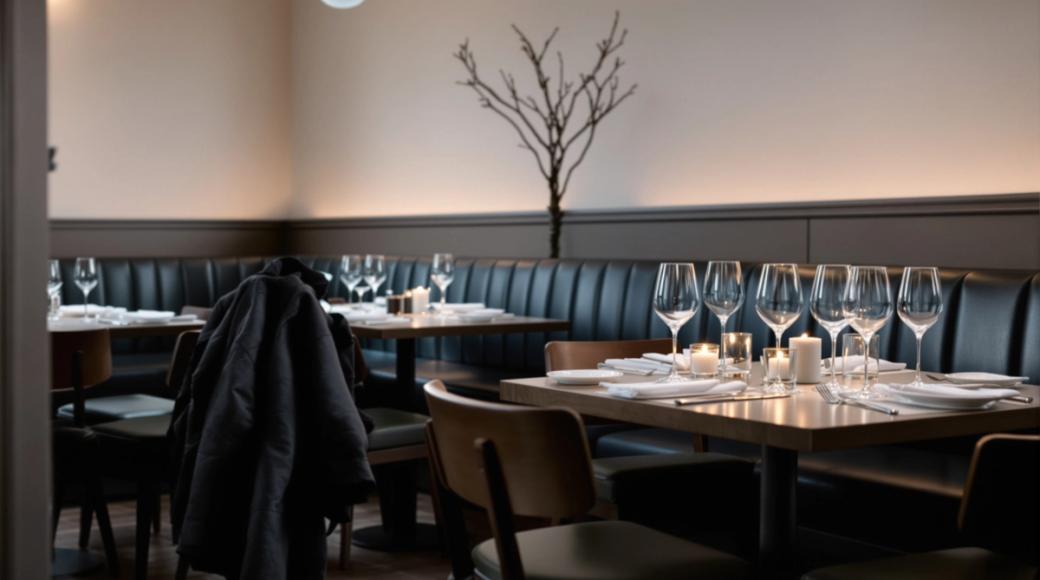
The late dinner trend is pushing dinner to 7 or 8 PM. Here is what that means for your early tables, your menu and how guests find you.
The late dinner trend is no longer a quirk of a handful of city diners. At 5:30 your tables sit empty, and at 8 o'clock everyone wants in at once. And the guest who does show up at 6 doesn't want three courses, and certainly not two hours at the table.
Michiel Huysmans of Teds All Day Brunch sees it this way: real dinner is becoming a 7 or 8 PM and later affair. People who sit down then want a whole evening. That makes the bill for a three-course meal easy to justify, because it comes with a complete night out. For a quick meal of an hour and a half, it's a different story. The same bill feels too steep. Restaurants that still build their menu and pricing around a 6 PM first seating are finding that this is exactly where revenue drops away.
Meanwhile, the money isn't leaving hospitality. Because everything has become more expensive, guests are more deliberate about where it goes. Some opt for a burger joint or a fast Italian concept, keep the food side small and spend the rest on drinks. For an operator with one or two sites, that has very concrete consequences. The early slot calls for a different offer, and the late evening has to truly deliver. If you haven't nailed both, you lose guests at both ends.
Two evenings, two different guests
What works is splitting the evening into two moments, each with its own promise. Early is short and affordable: a smaller menu, faster service, and a price that fits an hour and a half. Late is the full experience, where guests happily spend more because they've set aside the whole evening for it. Most restaurants try to make one menu work from 5:30 to 10 PM. The result is a place that's too expensive for the quick diner and too ordinary for the long night out.
That split only works if guests know about it before they visit. With shorter decision cycles, a guest searches Google for "food near me" at 5 PM and decides within a minute. They read your latest reviews, look at your profile and check whether your posts mention an early menu. If none of it adds up, they pick the burger place down the street. Whether that's fair doesn't matter to them.
Your Google profile decides which time slot you fill
With later dinners, the decision is often made well before the visit. The guest arriving at 8 PM already checked you out around lunchtime. A few things carry a lot of weight at that point: recent reviews that describe the evening atmosphere, photos of late service and a profile that makes clear what you offer that night. A profile with eight-month-old reviews and not a single post since the summer mainly tells guests that not much is happening.
Three signals guests read for each time slot
For the early slot, they look for speed and price: "served quickly", "great before the movie". For the late slot, they look for experience: "stayed until closing", "great wine list". And for both, they check whether the owner responds to criticism. Your reviews are the menu guests read before they ever see your actual menu. If you want your early offer to take off, you need reviews that talk about that early offer, and those only come if you ask for them at the right moment.
Where doing it by hand falls apart
A restaurant with three or more sites and a late peak has no energy left after 11 PM for review requests, replies and posts. So it all waits until Monday, and by then the moment has passed. A negative review about slow early service then sits unanswered for a week. Right in the middle of the shift to later dining, that costs you exactly the guests you were trying to win.
You can't stop the shift to 8 o'clock, but you can respond to it. Restaurants that give the early and late slots each their own offer, and show it online, fill both. AfterTheTable builds AI agents that take over that work after closing time. They ask for reviews at the right moment, reply to them on Google, TripAdvisor and Facebook, and publish Google Business Profile posts about your early menu or your late evening. That way you show online what you have to offer in both time slots, without having to do the work yourself.
Topic:Concept & trends
Video transcript
No, and so I do feel that it becomes, um, so shifts that I do foresee is, um, that dinner really becomes an, let's say, 7, 8 PM onwards thing. So early dinner, uh, really I think will require a different type of offering than basically real sit-down 3-course meal, because, um, if you want price-wise, you want to really I think have the idea that you then spend an entire evening and then, then the costs are, let's say, in line with the spend of an entire evening rather than just for 1. 5 hours, a quick meal.
So the, and there's a lot more, I think, offering in, let's say, um, not more functional but fun, let's say, stuff from burger places, what kind of fast Italian concepts and everything. So those will take a place, uh, for people who want to spend their money still in hospitality but want to do the limit, the, let's say, the, the food part to a, to, let's say, a smaller aspect, and then basically have more time or more money for drinks. So I think people are thinking more about the what, what, where they're going to spend it on because of the increase in, in price.
So, so everything is getting more expensive, but people are also having more money, so
More articles
 Concept & trends
Running a restaurant in a recession: why your concept needs to shift after eight years
18 October 2026 Sustainability
Restaurant sustainability: why it's all about the long term
18 October 2026 Guests