How a chef's tour catering run began with one lunch on a video shoot, and why your best leads depend on what guests say after the meal.
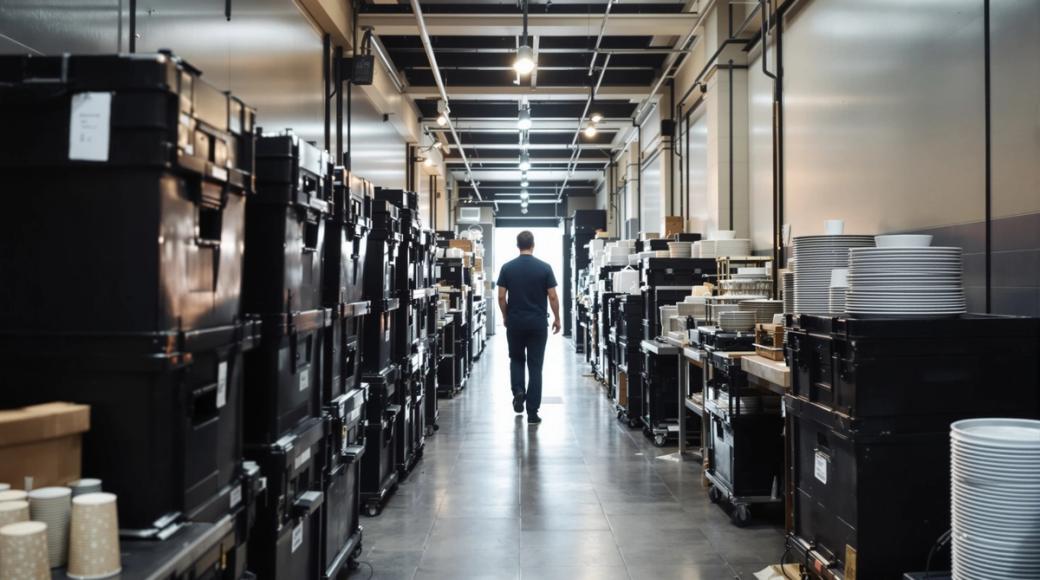
For chef Jeroen de Pauw, a career in tour catering started with one phone call and one lunch. A well-known Belgian artist was shooting a music video in his neighborhood and asked if he could cook for the crew. He had no equipment and no experience catering for a tour. A year later, he was on the road with that same team.
Most restaurant owners we talk to are waiting for growth they can plan. A second location, a catering arm, a partnership with an events agency. They build spreadsheets and investment plans and wonder why the big break never comes. Meanwhile, something they miss happens every week: a guest leaves impressed and has nowhere to put that impression. That guest could have been your next client, or the person who sends a colleague your way.
Jeroen came out of a Michelin-starred kitchen and wanted to try something different. He didn't plan the tour. On the day of the shoot, he simply cooked the way he always did, at Michelin level, for people who had never seen catering like that on a set. The experience spoke for itself because the right people were there to taste it. The problem for most restaurants: the decision-maker is rarely at the table. They read about you.
The opportunity lies in what guests say afterwards
What people think works: more marketing, a new website, a social media campaign. What actually works is simpler. The impression you leave on a guest has to land somewhere the next guest, client or partner will find it. For Jeroen, that was the conversation on set, right after lunch. For a restaurant with one to ten locations, it's Google, TripAdvisor and word of mouth from the guests who happened to make the time.
That means making the most of the moment after the meal. A guest who leaves happy will either have written a review within a few hours or forgotten all about it. A request by email, text or WhatsApp at the right moment makes the difference. And a disappointed guest is someone you want to speak to privately first, before it turns into a public one-star review that scares off a catering client.
Three leaks between plate and booking
We keep seeing the same three places where restaurants lose a good impression. The first leak is silence: happy guests who write nothing because nobody asked. The second is timing: the request arrives a week later, long after the taste has faded. The third is the reply: reviews left unanswered for months, while an organizer looking for tour catering or a corporate lunch is reading exactly how you treat your guests.
Why the third leak costs the most
An organizer looking for a caterer doesn't just read the stars. They read your replies. An owner with three locations who's in the kitchen every night doesn't have an hour a day to respond on Google, Booking and Facebook. So it piles up. An unanswered review says more about you than the review itself. That's exactly the layer you can automate without the tone turning generic.
Investors follow proof, not plans
The artist offered to co-invest in equipment so Jeroen could join the tour for a year. She didn't do it on the strength of a business plan, because there wasn't one. She did it because she had tasted the standard herself. For most restaurants, your online reputation plays that role: it's the proof a partner reads before picking up the phone. The more recent, answered reviews you have, the stronger that proof gets, month after month.
Growth in hospitality often comes through one guest who is impressed at the right moment. You can't plan that moment, but you can make sure it stays visible. AfterTheTable builds AI agents that automatically ask for reviews, catch negative feedback privately first, post replies on Google, TripAdvisor, Booking and Facebook, and keep your Google Business Profile up to date. You keep cooking, and what guests think after the meal ends up where your next client will read it.
Topic:Concept & trends
Video transcript
It's not really that I planned to do it. Something came very organically. Like, I was working in a Michelin-star restaurant and I would like to do something else.
And it was really... there was someone who called me. It was a Belgian famous singer and he made a kind of video clip in the neighborhood where I was living.
So they asked me, can you cook for us? Can you make lunch for us? But I always...
I was used to working in Michelin restaurant stars, uh, restaurants. So I had my own, uh, my own style of cooking. So I did the same for this day to cook for the artist there, and they was really impressed because they never seen a catering on, uh, on a concert that was so high level.
But so they said, yeah, it's really great, why don't you come with us to go on tour? And, but I never did it before, so I had not the material, not the experience, had nothing. But the artist in Belgium, she said, yeah, I will invest in it with you, and then you can come with us for 1 year.