Zero waste cooking is more than a sustainability story. It's a business model, as long as your guests know about it. Here's how to turn kitchen scraps into margin and reputation.
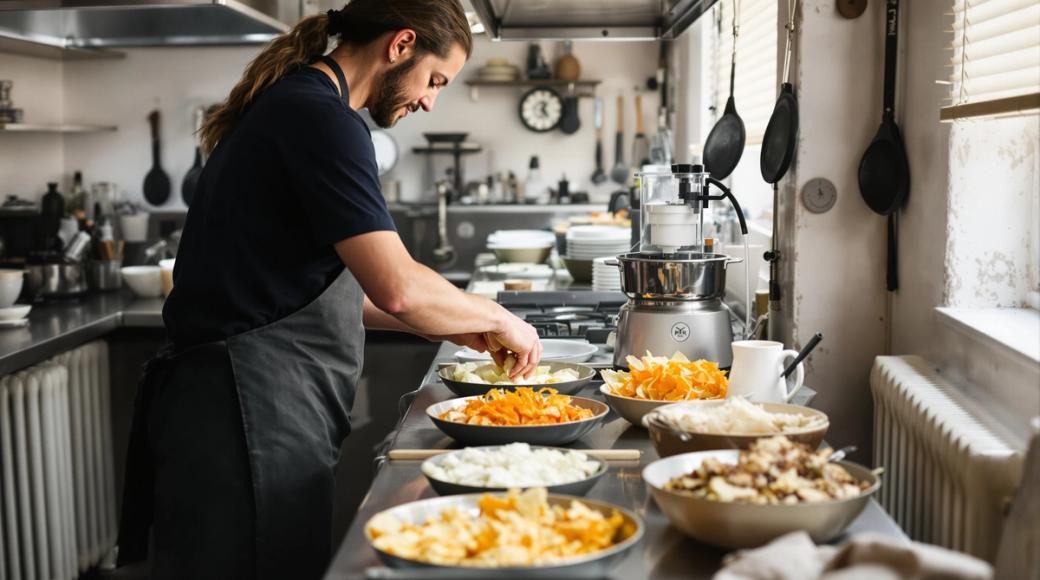
Zero waste cooking often starts in the bin behind the kitchen. Every night it fills up with orange peel, vegetable stalks and yesterday's bread, all bought at full price and never sold. Chef Jeroen de Pauw of Canapé Apéro bakes cakes from whole oranges, peel and all, and calls cooking without waste simply a financial model.
For most restaurant owners running one to three sites, waste feels like a fixed cost. You buy a crate of oranges for the juice, and the peel goes in the bin. You fillet fish, and the bones end up in the container. Week after week. Nobody does the maths, because it's just how things are. But every bit of peel you throw away is something you paid for. Add it up over a month in a busy kitchen and you'll find a figure that can easily wipe out the margin on an entire dish.
The second problem is trickier. Kitchens that do make clever use of leftovers don't tell anyone. The chef knows the crumble comes from stale bread and the stock from vegetable peelings. The guest doesn't. On Google you see reviews about portion sizes and service, never about the decision to use everything. So the work in the kitchen only delivers cost savings, when it could have built your reputation too. That's where the gap is.
Every ingredient counts twice
De Pauw puts it plainly: everything on the plate gets used in full, even the peel. In his view it's easy to do. Above all, it takes a different way of thinking. What you'd normally throw away becomes an ingredient. A whole orange in a cake, peel in a syrup, stalks in a soup. Your purchasing stays the same, but you get more sellable dishes out of it. That's the first time an ingredient counts: in your food cost.
The second time it counts is in what guests say about you. A guest who hears that the dessert cake is made from whole oranges remembers it. That guest will write about it in a review, if you ask at the right moment. That's exactly where most restaurants drop the ball. They cook smart, but never ask for the review and rarely reply to what does get written. The story stays stuck in the kitchen.
Three leaks in the zero waste model
In restaurants that already work consciously with leftovers, we keep seeing the same three places where the return leaks away. None of them have anything to do with cooking. They're about what happens after the meal, once the guest has gone home and the kitchen is already thinking about the next service.
Leak 1: the invisible menu. Leak 2: the forgotten review. Leak 3: the empty profile.
The invisible menu: the menu lists the orange cake, but not why it's special. The forgotten review: the guest was thrilled, but nobody asked them within a few hours to share that on Google. The empty profile: your Google Business Profile shows photos from last year, while your kitchen creates something new every week from food that would otherwise be thrown out. Zero waste cooking only pays off in full when guests can find it, read about it and pass it on.
Where automation takes over the work
A chef who uses the whole orange doesn't have time to chase reviews as well. And they don't need to. One AI agent sends a request after the visit by email, text or WhatsApp. A second agent replies to reviews on Google, TripAdvisor and Facebook, mentioning the dish the guest wrote about. A third posts weekly on your Google profile about your latest leftover-based dish. Negative feedback comes in privately first, so you can put things right before it goes public.
Cooking without waste saves money in the kitchen. But most of the return lies in what guests say about it, and that doesn't happen on its own. AfterTheTable builds AI agents that request and reply to reviews and keep your Google profile up to date. That way, every bit of peel you don't throw away also earns its place in your ranking.
Topic:Sustainability
Video transcript
I read a book about zero waste cooking. It's very technical in the kitchen. What can you do?
You know, with the climate changing, or even cooks, they can make a difference about it. They can try to cook with everything that they've got. So that's really the story that I want to, to tell in my book, is to, to make chefs behave so that you can cook with everything, but with a lot of things that you normally throw away, that you can make something with it.
And it's also a financial model. The things that you normally throw away, you can use them. So we make cakes with whole oranges.
The thing was that I made recipes and all the ingredients that you've got on your plate, we use them all, everything, even the peel, even, and it's, it's easy to do. It's a new way of thinking, a new way of cooking. But I think if we can, if we can do something to stop the climate changing, then we have to do it.